A bystander as soon as told me, after we ended up a workplace first aid training, that the only reason he enlisted was because his supervisor firmly insisted. 6 weeks later on he made use of those abilities on his papa, who fell down at a family barbeque. The ambulance crew informed him candidly: beginning CPR early most likely conserved his father's brain.
He did not remember every acronym or every slide. What he did bear in mind was just how it really felt to kneel beside a manikin, secure his elbow joints, and keep going till assistance showed up. That muscle mass memory is precisely what a well run fast first aid course is created to build.
Fast, express, condensed, accelerated - the labels vary, therefore does the quality. If you want to go from absolutely no to accredited without throwing away time or cash, it helps to understand what you are in fact buying when you look for a "fast first aid course near me".
This overview goes through the realities behind fast first aid and CPR training, what a great course ought to cover, and how to choose an alternative that fits your routine without cutting edges on safety.
What "fast" really means in first aid training
Fast first aid training does not indicate sloppy or insufficient, at the very least not when it is done properly. In practice, rate typically comes from two things: concentrating firmly on core abilities, and utilizing blended distribution so you complete theory online and keep class time for hands on work.
A reliable fast first aid course or fast cpr course is commonly:
- Short in overall hours compared with multi day traditional courses, commonly 3 to 6 hours of get in touch with time plus pre learning. Focused on one of the most usual life threatening emergency situations, rather than every unusual circumstance in the textbook. Highly structured, with very little downtime, side chatter, or redundant content.
That compromise jobs well for lots of people. The first aid and cpr skills that absolutely matter in the first couple of minutes of an emergency are not complicated. Early CPR, very early defibrillation, fundamental blood loss control, safe positioning, and calling for help will certainly save far more lives than an excellent bandage on a sprained ankle.
Where rate becomes a problem is when companies slash off the time needed to practice. You can watch CPR video clips throughout the day, but till you really press on an upper body and really feel how deep and fast proper compressions are, you do not have the skill. Fast first aid courses that avoid or hurry functional analysis usually produce paper certifications, not qualified responders.
When you review express first aid courses or express cpr courses, always ask just how much hands on time is included, not simply the promoted duration.
Core abilities you should leave with
Whether you reserve a workplace first aid training, an express childcare first aid course, or a weekend break CPR refresher, the results ought to really feel remarkably similar. The context and added topics may transform, yet the structures remain constant.
By the end of a solid first aid and cpr course, you need to have the ability to:

Recognise an emergency quickly. That seems obvious, however I have actually enjoyed grownups stand iced up by a flattened coworker since they were unclear if they were "panicing." Fast courses make use of scenarios to educate that initial psychological action: this is not normal, I need to act.
Check responsiveness and breathing securely. You require to know just how to approach, just how to open up an air passage, and exactly how to choose whether breathing is normal or otherwise. Lots of learners undervalue how agonal gasps look and sound. Excellent cpr training always clears up this.
Call for assistance efficiently. Calling emergency situation services is not just pushing three numbers. In class we practice what to state, just how to explain the location, and just how to hand over to someone else without chaos.
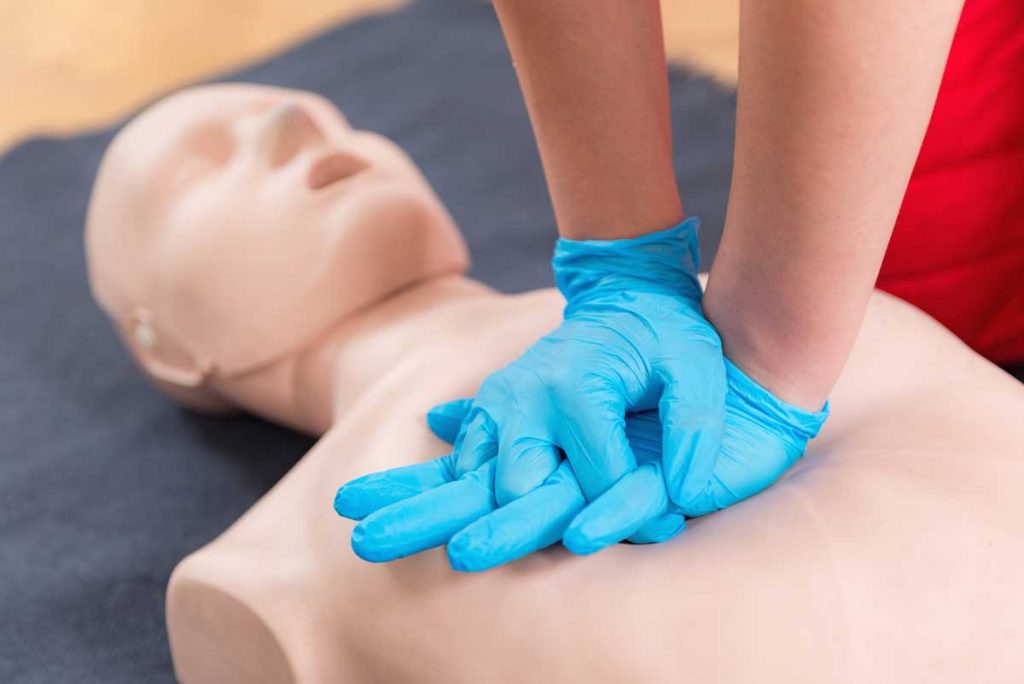
Start CPR with self-confidence. That consists of proper hand position, compression depth and rate, risk-free air flows if required in your neighborhood method, and exactly how to swap rescuers if there are 2 people. Fast cpr courses concentrate hard on this, often utilizing comments manikins that show whether your compressions are deep enough.
Use an AED without hesitation. Modern defibrillators are extremely easy to use, yet people still bother with "doing it incorrect." A reliable first aid and cpr training course lets you open up an AED, location pads, follow motivates, and handle practical questions like chest hair or water.
Control life endangering bleeding. Direct stress, standard dressings, and when to utilize a tourniquet or haemostatic clothing if those belong to your office kit.
Position and keep track of a casualty. Recovery position for a person who is breathing however unresponsive, resting placements for breathing difficulty, and ongoing checks up until assistance arrives.
On top of this, different first aid courses layer on subjects such as choking, burns, fractures, allergies, diabetic emergency situations, and seizures. Fast first aid course suppliers occasionally press these into situations instead of separate lectures. The objective is still the same: you should have the ability to make safe, straightforward decisions under stress.
Types of fast and express first aid courses
Once you begin searching, the food selection of choices expands rapidly. From a trainer's side, there are a few usual patterns.
General fast first aid course
This is the classic brief, wide program that covers grown-up standard life support, blood loss, common injuries, and straightforward ailment acknowledgment. It matches office workers, volunteers, and anybody that desires a first aid certificate for basic life as opposed to a certain job requirement.
Duration varies by nation and accreditation, yet a typical fast first aid training session competes half a day personally, supported by 1 to 3 hours of on-line pre learning.
CPR just and fast cpr refresher course
If your sole emphasis is resuscitation, look for targeted cpr courses or express cpr training. These fast cpr courses centre on:
- Adult CPR and AED for solitary rescuer Sometimes child and infant CPR, depending upon the program Special situations like sinking or trauma if time allows
A fast cpr correspondence course is optimal if you currently hold a certificate and wish to keep your abilities current. In numerous jurisdictions, CPR requires renewing every 12 months for work environment or expert conformity. In practice, I suggest a refresher at the very least every 1 to 2 years for everyone. Strategy drifts, confidence fades, and guidelines do change.
Express childcare first aid course
Parents, very early childhood years teachers, and college personnel normally need greater than grown-up CPR. Express childcare first aid courses concentrate on:
- Infant and youngster CPR Choking management for children and children Fever, seizures, allergies, and asthma Practical problems in childcare settings, such as managing several youngsters while responding
An express child care first aid training session could still be only one day, however the study and web content alter heavily toward pediatric circumstances. If you deal with kids, pick this over a generic course. The emotional lots of treating a kid is very different, and practicing on child and baby manikins matters.
Blended first aid and cpr course
Many carriers now incorporate on-line learning with short, extensive practical workshops. You total video clips, tests, and concept modules at home, after that participate in a fast first aid course personally for analysis and hands on skills.
This layout functions particularly well for:
- Busy professionals who can not manage multiple days away from work. Learners that such as to stop and rewind theory material. Organisations reserving team first aid and cpr training classes on limited schedules.
The secret is honesty. You must actually finish the pre course components effectively. Skipping through them and hoping to catch up in course rarely ends well.
What a well designed fast first aid training day looks like
Not all "express" routines are equal. When I develop a fast first aid and cpr course, I function in reverse from what learners must do capably prior to I authorize their first aid certificate, then develop a tight schedule around that.
A common in person day for a blended or express first aid course may resemble this:
Short review of pre knowing and key concepts, including questions. Demonstration and method of main study, CPR, and AED, rotating with grownup, youngster, and infant manikins if covered. Scenario based technique of usual emergencies such as choking, hemorrhaging, and unconscious breathing casualties. Practical analysis and debrief, with time for individual coaching and office specific questions.Notice just how the emphasis sits squarely on doing, not listening. A well run express first aid training session really feels physically energetic, sometimes somewhat tiring. If you discover yourself resting for long stretches enjoying slides, you are not in a fast course, you remain in a slow-moving lecture with a short schedule.
How "from zero to accredited" in fact works
People often worry that they have no baseline knowledge. That is not an issue. In several methods, students who pertain to first aid fresh, without any fifty percent bore in mind misconceptions from years past, are much easier to teach.
The trip from zero to accredited in a fast first aid or express cpr course usually plays out in three stages.
First, you develop a psychological map. During on-line components or early in the course, you discover the framework: check for threat, check feedback, phone call for help, start compressions, make use of an AED. You read about the recuperation placement, extreme blood loss, and choking. This is where mnemonics and basic flowcharts help.
Second, you layer in muscle mass memory. You kneel down, position your hands, press, and feel the resistance in the intensive first aid training classes manikin's breast. You practise rolling someone right into healing placement. You use plasters, rehearse your words for an emergency telephone call, and walk through exactly how you would handle an unconscious colleague in your real workplace.
Third, you confirm you can place it together under light pressure. Throughout assessment, you react to timed situations, commonly with a companion. You do not require to be excellent. You do need to be safe, reasonably positive, and able to comply with the core series without coaching.
That is the genuine point of fast certification. The paper certificate or electronic badge just matters because it indicates that an assessor has seen you get the job done to a clear standard.
Choosing the ideal fast first aid course provider
I have actually shown for huge nationwide organisations and tiny local teams. Size alone does not predict high quality. What matters more is just how seriously the service provider takes both compliance and learning.
Here is a simple list that aids when comparing fast first aid courses or express cpr courses.
- Accreditation: Are their first aid and cpr courses acknowledged by the authority or market body appropriate to your work or country? For work environment compliance, this is non negotiable. Instructor experience: Do they use fitness instructors with frontline or real life backgrounds, such as paramedics, nurses, or skilled first aid instructors, and do they obtain continuous training themselves? Practical time: How many hours are genuinely hands on, with manikins and circumstances, rather than slides? If the answer is "a quick run through at the end," appearance elsewhere. Blended design: If the course is short, do they supply significant pre discovering or on-line components, or are they attempting to pack every little thing right into a cramped class block? Reviews and responsiveness: Do past participants point out feeling confident after that, and does the organisation answer inquiries plainly before you book?
When looking online for a "fast first aid course near me" or "express first aid course," use this checklist as a filter. Advertising language can be shiny. Accreditation details and timetables are harder to fake.
How neighborhood policies and work environment requires change the picture
Regulations around first aid course material, length, and renewal regularity differ commonly. In some areas, a typical complete first aid and cpr course is expected to be a minimum of one full day. In others, a 3 to 4 hour combined class is sufficient if the company fulfills specific assessment criteria.
Workplace role shapes your selection too. A couple of instances from practice:
A child care worker usually requires an express child care first aid certificate that clearly covers pediatric CPR, asthma, and anaphylaxis, restored every 1 to 3 years relying on regional law.
A construction website very first aider might need a more comprehensive fap first aid or similar program that covers crush injuries, environmental exposure, and injury, even if provided in a sped up format.
A gym trainer can usually fulfill their commitments with a fast cpr course combined with a brief basic first aid module, as long as AED usage is included.
For small companies, I commonly recommend a fast first aid training package delivered on site. The instructor can after that adapt circumstances to your genuine atmosphere, explain where to store the package, and even aid develop case response strategies. The express nature of the course maintains downtime reduced for staff, yet the contextualisation makes the discovering stick.
If you are reserving by yourself and unclear what you actually require, ask your company, licensing body, or sporting activities association for specific needs prior to registering. After that match those against course descriptions.
Online, mixed, or class just: which is best?
Some learners still like a standard, completely in person first aid course. Others appreciate the adaptability of online concept. From a training viewpoint, each layout has profession offs.
Purely on the internet courses for first aid and cpr stress me, unless they are clearly badged as recognition only and do not assert complete proficiency. Without supervised technique, it is impossible to validate that you can do risk-free, effective compressions, or roll a casualty with spine precautions.
Blended express first aid and cpr courses strike a far better equilibrium. The online part can cover:

- Legal and ethical considerations. Infection control and basic precautions. The scientific research behind CPR and defibrillation. Recognition of common medical conditions.
Then the in person workshop focuses on guidebook skills and analysis. That framework is suitable for fast certification since you do not squander priceless classroom minutes checking out text on slides that you might have studied at home.
Classroom only fast first aid courses first aid training course outline still belong, specifically where students have actually limited internet gain access to or language barriers that are better dealt with face to face. To achieve "fast" standing legitimately, those classes typically tighten their extent to core emergency situations and miss less vital topics.
When picking, be honest regarding your own learning design. If you know you will certainly hurry or overlook on-line components, a firmly run in person session might be a lot more effective, also if it takes a little longer on the day.
Keeping your skills sharp after a fast course
First help is subject to spoiling. I sometimes ask returning students, "When did you last practise CPR on a manikin?" The most common response is, "The last time I was here for training."
Guidelines usually recommend CPR refresher courses at the very least annually and full first aid refreshers every 2 to 3 years. Fast cpr correspondence course exist specifically as a result of this. They assume you have a foundation and concentrate on getting rid of corrosion, fixing poor behaviors, and upgrading you on any type of standard changes.
Between formal courses, a few simple habits make a large difference:
Read or enjoy one trustworthy first aid source every few months and psychologically rehearse what you would certainly carry out in your own environment.
Locate and check the first aid package and AED wherever you spend a great deal of time: home, job, health club, college. You lose crucial minutes in a genuine emergency situation if no one understands where the essential tools lives.
Talk via "what if" scenarios with coworkers or family members in a tranquil moment. Who calls for assistance, who brings the AED, that meets the rescue at the door.
Encourage your work environment or area group to run short practice drills. 5 mins spent pretending a colleague has actually collapsed in the parking area can disclose a great deal about access, interaction, and confidence.
The whole factor of an express first aid course or express cpr course is to lower the obstacle to access. It obtains you began. Enduring that capability still takes intentional method, also if it is informal.
When a fast course is not enough
Most of the moment, fast first aid courses are specifically what individuals require. Yet there are scenarios where you must buy deeper training.
Remote atmospheres are a traditional example. If you function or travel in locations where an ambulance could be an hour away, a condensed metropolitan focused first aid training is not sufficient. You need increased skills in prolonged care, environmental management, and improvisation.
High danger markets such as mining, heavy production, and certain sporting activities may call for prolonged fap first aid or advanced first aid modules that consist of oxygen therapy, spinal management, and complicated injury treatment. These are tough to compress safely.
People in management duties, such as institution principals or event organisers, typically take advantage of additional web content on emergency situation preparation, communication with family members, and message event assistance. That sits beyond the range of many express first aid training sessions.
Think of fast certification as a strong baseline, not the ceiling. If your responsibilities or environment bring greater stakes, treat the condensed course as the first sounded on a longer ladder.
The real value of getting licensed quickly
When someone asks me whether an express first aid course is "worth it," I reflect to a certain evening course. An individual, a young retail employee, finished a fast cpr course visibly unsure if she had succeeded. Her compressions were technically audio, but her self self-confidence was low.
A couple of months later on she emailed our workplace. A customer had fallen down outside the shop. She started CPR while a colleague called for assistance and made use of the shopping center AED when security brought it. The man endured to healthcare facility discharge.
Her message was brief and rugged. The part that stuck with me was, "I just did what we practiced in course."
That is what you are purchasing when you invest in fast first aid and cpr training classes. Not a piece of paper for your human resources data, not a tick box on a compliance checklist, however the capacity to act in those initial disorderly minutes when somebody's life turns on a couple of easy actions.
A meticulously structured fast first aid course, whether basic, Brisbane first aid courses childcare focused, or a pure cpr training module, lets you get to that point without losing days of your time or learning pointless material. As long as you select a trusted company, commit effectively to the procedure, and refresh your skills regularly, "from absolutely no to accredited" can be both reliable and truly life changing.